 6377511211
 myphysioindia@gmail.com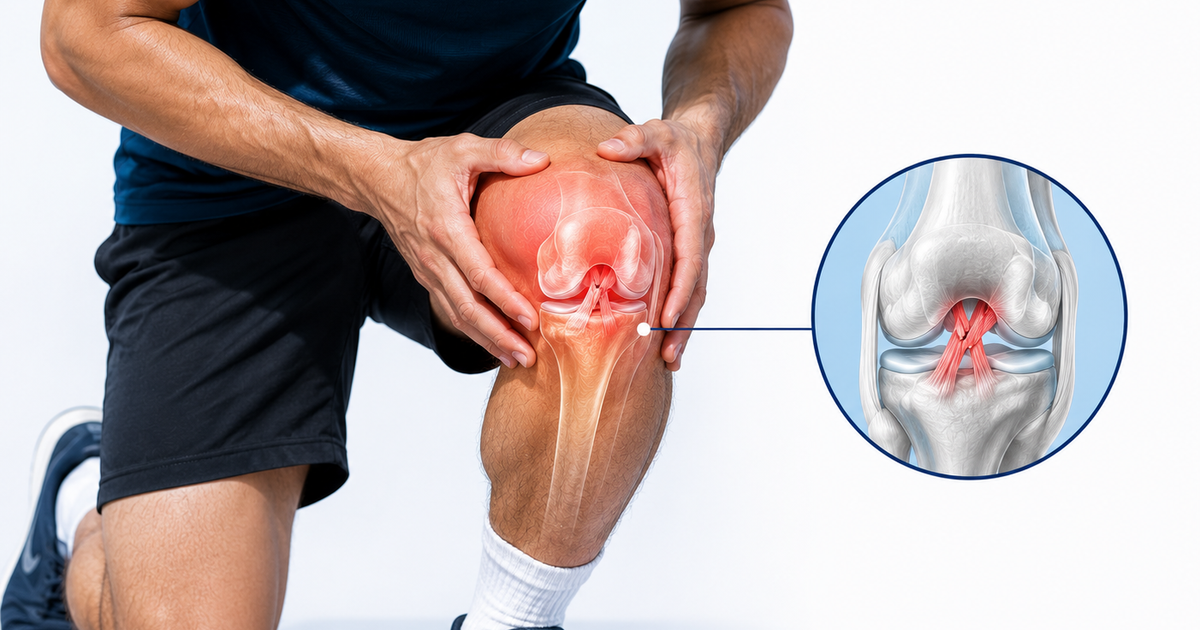
ACL Injury Rehabilitation in Jaipur: Physiotherapy Steps for Safe Recovery & Return to Sports
The anterior cruciate ligament (ACL) is one of the important ligaments that helps stabilize the knee during activities such as running, jumping, turning, and changing direction. An ACL injury is common among athletes and people involved in sports that require sudden movements.
Recovery from an ACL injury can take time and usually requires a structured rehabilitation program. Physiotherapy plays an important role in restoring knee movement, strength, balance, stability, and functional ability. The exact rehabilitation plan depends on the severity of the injury, treatment approach, individual goals, and advice from the treating healthcare team.
What Is an ACL Injury?
The ACL connects the thigh bone (femur) to the shin bone (tibia) and helps control forward movement and rotational stability of the knee.
An ACL injury can range from a mild sprain to a complete ligament tear. Some injuries may be managed conservatively, while others may require surgical reconstruction depending on factors such as the injury, knee stability, activity level, and sporting goals.
Common Symptoms of an ACL Injury
An ACL injury may cause:
- Sudden knee pain
- Swelling around the knee
- A popping sensation at the time of injury
- Difficulty putting weight on the affected leg
- Reduced knee movement
- Feeling of knee instability or “giving way”
- Difficulty running, jumping, or changing direction
A proper medical assessment is important to determine the extent of the injury.
Physiotherapy Steps for ACL Rehabilitation
ACL rehabilitation is generally progressive. The exercises and activities should be advanced according to healing, strength, movement quality, and professional assessment.
1. Managing Pain and Swelling
During the early stage, rehabilitation may focus on controlling pain and swelling and protecting the injured knee.
The physiotherapist may guide you regarding appropriate movement, activity levels, and exercises during this stage.
2. Restoring Knee Movement
After an ACL injury or surgery, knee stiffness can affect normal movement.
Gentle, appropriate mobility exercises may be introduced to gradually improve the knee's range of motion.
3. Improving Muscle Strength
Weakness in the muscles around the knee and hip can affect stability and movement.
A progressive strengthening program may target:
- Quadriceps
- Hamstrings
- Gluteal muscles
- Calf muscles
- Core muscles
Exercise intensity is gradually increased as the person progresses through rehabilitation.
4. Improving Balance and Proprioception
The ability to control the position of your body and knee is important for sports and everyday activities.
Balance and proprioception exercises may help improve neuromuscular control and confidence in the affected leg.
5. Functional Training
Once adequate strength and movement have developed, rehabilitation can progress toward functional activities.
These may include controlled:
- Squatting
- Stepping
- Lunging
- Landing movements
- Single-leg exercises
- Directional movements
Exercises are selected according to the individual's stage of recovery.
6. Sport-Specific Rehabilitation
Athletes require more than basic pain relief and normal walking before returning to competitive sports.
Sport-specific rehabilitation may gradually introduce movements such as:
- Running
- Jumping
- Landing
- Acceleration and deceleration
- Cutting and direction changes
- Agility drills
The progression should be based on appropriate clinical and functional criteria.
ACL Rehabilitation After Surgery
For patients who undergo ACL reconstruction, physiotherapy is an important part of the recovery process.
The rehabilitation timeline varies between individuals. Treatment may progress through stages involving:
Early Phase → Mobility & Activation → Strength Development → Balance & Control → Running & Agility → Return-to-Sport Preparation
The progression should follow the surgeon's and physiotherapist's recommendations. Returning to sports too quickly can increase the risk of setbacks or further injury.
Why Strength Testing Matters Before Returning to Sports
Feeling better does not always mean that the knee is ready for sports.
Before returning to high-demand activities, a physiotherapist may assess factors such as:
- Knee range of motion
- Muscle strength
- Single-leg control
- Balance
- Jumping and landing mechanics
- Functional movement
- Sport-specific performance
Return-to-sport decisions should be individualized and made with the treating healthcare team.
How Physiotherapy Helps Prevent Future Problems
Rehabilitation is not only about recovering from the initial ACL injury. It also focuses on improving movement quality and physical conditioning.
A suitable program may help you learn:
- Proper landing techniques
- Better lower-limb control
- Safe progression of training
- Strength and conditioning exercises
- Sport-specific movement strategies
These factors can support a safer return to physical activity.
When Should You See a Physiotherapist?
Consider professional physiotherapy assessment if you have:
- Persistent knee stiffness
- Weakness after an ACL injury or surgery
- Difficulty walking normally
- Knee instability
- Reduced confidence while using the injured leg
- Difficulty returning to exercise or sports
- Problems with jumping, running, or changing direction
A physiotherapist can assess your current abilities and develop a rehabilitation plan appropriate for your stage of recovery.
ACL Injury Rehabilitation in Jaipur
At My Physio Multispeciality Clinic, Jaipur, sports rehabilitation can be customized according to your injury, treatment history, physical condition, and sporting goals.
A rehabilitation program may include therapeutic exercises, progressive strengthening, mobility training, balance and proprioception exercises, functional training, and sport-specific rehabilitation as appropriate.
The aim is to help patients progressively improve knee function and physical confidence while following appropriate medical and rehabilitation guidance.
Conclusion
ACL injury recovery requires patience, progressive rehabilitation, and appropriate professional guidance. Physiotherapy can help restore knee mobility, strength, balance, movement control, and functional ability.
Whether you are recovering after ACL surgery or following a non-surgical treatment plan, your rehabilitation should be individualized and progressed according to your recovery.
If you are looking for ACL injury rehabilitation in Jaipur, a professional physiotherapy assessment can help determine the appropriate next steps for your recovery and return to sports.
 Whatsapp No. : 9782468066