 6377511211
 myphysioindia@gmail.com
Spinal Stenosis in Jaipur: Symptoms, Walking Difficulties & Physiotherapy Options
Spinal stenosis is a condition in which spaces within the spine become narrower, potentially putting pressure on the spinal cord or nearby nerves. It commonly affects the lower back and neck. As a result, some people experience back pain, leg discomfort, numbness, weakness, or difficulty walking for long periods.
Although spinal stenosis becomes more common with age, symptoms vary from person to person. The right treatment depends on the location of the narrowing, the nerves involved, and how much the condition affects daily activities.
At My Physio Multispeciality Clinic in Jaipur, physiotherapy may help suitable patients manage symptoms, improve mobility, and maintain independence through an individualized rehabilitation programme.
What Is Spinal Stenosis?
The spine consists of vertebrae, intervertebral discs, joints, ligaments, and nerves. The spinal canal is the passage through which the spinal cord and nerve structures travel.
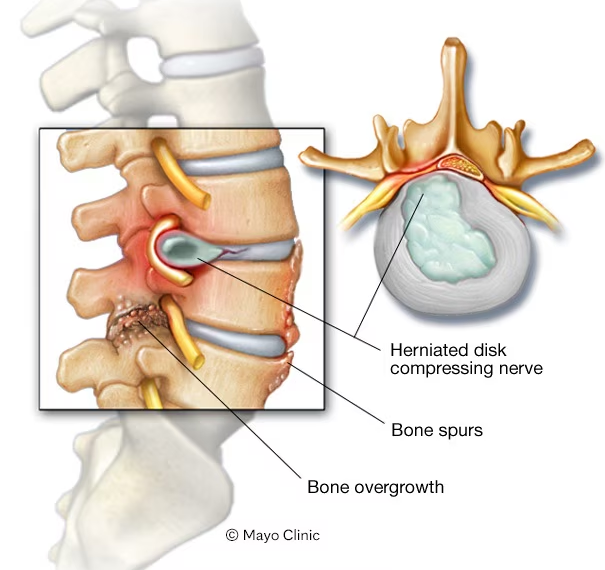
Spinal stenosis develops when this passage becomes narrower than usual. The narrowing may result from age-related changes, thickened ligaments, bone spurs, disc bulges, or other spinal conditions.
Some people have spinal stenosis without noticeable symptoms. However, when the narrowing affects sensitive nerve structures, it can lead to pain, tingling, numbness, weakness, or difficulty with movement.
Types of Spinal Stenosis
1. Lumbar Spinal Stenosis
Lumbar spinal stenosis affects the lower back. It may cause pain, heaviness, tingling, or weakness in the buttocks and legs. Some people find that standing or walking makes their symptoms worse.
2. Cervical Spinal Stenosis
Cervical spinal stenosis affects the neck. It can cause neck discomfort, numbness or weakness in the arms and hands. When the spinal cord is compressed, a person may also experience balance problems, difficulty walking, or reduced hand coordination.
3. Thoracic Spinal Stenosis
Thoracic spinal stenosis affects the middle portion of the spine. It is less common than lumbar or cervical stenosis. Depending on the degree of nerve involvement, symptoms may affect the trunk or legs.
Common Symptoms of Spinal Stenosis
Spinal stenosis symptoms depend on the affected spinal region and the degree of nerve compression. Some people experience mild discomfort, while others develop symptoms that interfere with walking and everyday activities.
1. Lower Back Pain
People with lumbar spinal stenosis may experience aching, stiffness, or discomfort in the lower back. Pain can become more noticeable after prolonged standing, walking, or certain movements.
However, lower back pain has many possible causes. A professional assessment can help determine whether spinal stenosis may be contributing to the symptoms.
2. Leg Pain and Heaviness
Pain may spread from the lower back or buttocks into one or both legs. Some people describe a feeling of heaviness, fatigue, or tightness when they walk.
These symptoms may improve after sitting or bending forward, although the pattern varies between individuals.
3. Numbness and Tingling
Pressure on spinal nerves can cause pins and needles, reduced sensation, or numbness in the legs, feet, arms, or hands. The affected area depends on which nerves are involved.
Persistent or worsening numbness should be assessed by a healthcare professional.
4. Muscle Weakness
Some people develop weakness in their legs or feet. This may make climbing stairs, standing from a chair, or walking safely more difficult.
New or progressive muscle weakness requires prompt medical evaluation.
5. Balance and Coordination Problems
Cervical spinal stenosis can sometimes affect the spinal cord. Warning signs may include unsteady walking, frequent falls, difficulty with fine hand movements, or reduced coordination.
These symptoms should not be ignored because spinal cord compression can cause lasting problems if treatment is delayed.
Why Does Spinal Stenosis Cause Walking Difficulties?
Walking difficulties are particularly common in lumbar spinal stenosis. The condition may reduce the space available for nerves, which can lead to symptoms during standing or walking.
One important symptom pattern is called neurogenic claudication. It may cause leg pain, heaviness, tingling, or weakness after standing or walking for a period of time.
Common walking-related difficulties include:
-
Needing to stop frequently while walking
-
Feeling heaviness or discomfort in the legs
-
Finding it difficult to walk long distances
-
Experiencing increased symptoms while standing upright
-
Feeling more comfortable while sitting or leaning slightly forward
-
Having difficulty with shopping, household tasks, or outdoor activities
Some people notice that walking while leaning slightly forward feels easier than walking upright. This may occur because the position changes the available space around certain spinal nerves.
Nevertheless, walking pain can also result from circulation problems, joint conditions, or other neurological disorders. A proper assessment is important before choosing treatment.
What Causes Spinal Stenosis?
Spinal stenosis can develop gradually over time. Several factors may contribute to narrowing of the spinal canal.
1. Age-Related Changes
As the spine ages, discs may lose height, joints may enlarge, and ligaments may thicken. These changes can reduce the space available for nearby nerves.
2. Bone Spurs
Arthritic changes in the spinal joints can lead to the formation of bone spurs. Depending on their location, these growths may contribute to spinal canal narrowing.
3. Bulging or Herniated Discs
A disc may extend beyond its usual boundary or herniate through a weakened outer layer. In some cases, this reduces the space around nearby nerves.
4. Thickened Spinal Ligaments
Ligaments help support and stabilize the spine. When certain ligaments thicken, they may contribute to narrowing of the spinal canal.
5. Previous Spinal Injury or Surgery
Injury, changes following surgery, or other structural conditions can sometimes affect the space available for nerves.
6. Congenital Narrowing
Some people are born with a relatively narrow spinal canal. Symptoms may appear earlier in life or develop later when additional age-related changes occur.
How Is Spinal Stenosis Diagnosed?
An accurate diagnosis helps determine which treatment options are appropriate. A doctor or qualified healthcare professional may use several methods to assess the condition.
Medical History
Your healthcare professional may ask about your pain, walking tolerance, numbness, weakness, balance, and activities that improve or worsen symptoms.
Physical and Neurological Examination
The examination may include checking spinal movement, muscle strength, sensation, reflexes, balance, and walking pattern. These findings help identify possible nerve involvement.
MRI Scan
An MRI can show the spinal canal, discs, ligaments, and nearby nerve structures. It may help identify the location and extent of narrowing when imaging is clinically appropriate.
Other Investigations
X-rays may help assess spinal alignment and certain bone changes. In selected cases, a doctor may recommend other imaging or nerve-related tests depending on the symptoms.
Important: Spinal stenosis seen on an MRI does not automatically mean it is the cause of every symptom. Imaging findings should be considered alongside the person's examination and medical history.
Physiotherapy for Spinal Stenosis in Jaipur
Physiotherapy may help suitable patients manage spinal stenosis symptoms, improve walking tolerance, and maintain strength. Treatment should be tailored to the individual's symptoms, mobility, medical history, and neurological findings.
At My Physio Multispeciality Clinic in Jaipur, an individualized physiotherapy programme may include the following approaches when appropriate.
1. Gentle Mobility Exercises
Appropriate movement exercises may help maintain spinal and joint mobility. Depending on the symptoms, a physiotherapist may select comfortable movements that reduce stiffness without aggravating nerve-related pain.
Exercises should be adapted to the affected spinal region. Movements that worsen numbness, weakness, or radiating pain should be reviewed rather than continued without guidance.
2. Core Strengthening
The abdominal and trunk muscles help support the body during everyday movement. A suitable strengthening programme may improve muscular endurance and make activities such as standing, sitting, and walking easier.
The exercises should begin at a manageable level and progress gradually according to the person's ability.
3. Hip and Leg Strengthening
Strengthening the hips and legs may help improve walking, balance, and functional independence. A physiotherapist may recommend supported exercises, sit-to-stand practice, or other movements based on the person's safety and tolerance.
4. Walking and Endurance Training
When appropriate, a gradual walking programme may help improve activity tolerance. Shorter walking intervals with rest periods may be more manageable than attempting long distances immediately.
The duration and intensity should be adjusted according to symptoms. Patients with significant balance problems or weakness may need supervised training.
5. Balance and Functional Training
For people experiencing reduced stability, therapy may include safe balance exercises, movement coordination, and practice of everyday activities.
These exercises can help address functional limitations, particularly when they are combined with appropriate medical evaluation.
6. Posture and Activity Modification
A physiotherapist can help identify positions and activities that aggravate symptoms. Some people with lumbar stenosis feel more comfortable with slight forward bending, while others need a different approach.
Practical advice may include taking regular movement breaks, adjusting work positions, using appropriate support when necessary, and avoiding activities that repeatedly worsen symptoms.
7. Education and Home Exercise
A home exercise programme can help patients continue their rehabilitation between appointments. Exercises should match their diagnosis, symptoms, and physical ability.
Regular review allows the programme to be adjusted as mobility and tolerance change.
Can Spinal Stenosis Be Treated Without Surgery?
Many people with mild or moderate symptoms can initially explore non-surgical management under professional guidance. Depending on the clinical findings, this may include physiotherapy, activity modification, and medication prescribed by a doctor.
However, physiotherapy does not physically remove bone spurs or guarantee that the spinal canal will widen. Its main goals are to manage symptoms, improve function, and support safe movement.
A specialist may consider additional treatment when symptoms remain severe or when examination findings indicate significant nerve compression.
Surgical assessment may be necessary in selected cases, particularly when walking ability continues to decline or neurological problems progress.
When Should You Seek Medical Attention?
Most back and leg symptoms are not emergencies, but certain warning signs require urgent attention.
Seek emergency medical care if you experience:
-
New loss of bladder or bowel control
-
New difficulty passing urine or inability to urinate
-
Numbness around the groin, inner thighs, or saddle area
-
Rapidly worsening weakness in one or both legs
-
Sudden major difficulty walking associated with new neurological symptoms
These signs may indicate serious nerve compression and should not be managed with exercises alone.
You should also arrange a prompt medical assessment if you notice progressive balance problems, repeated falls, worsening hand coordination, or persistent limb weakness.
Tips for Supporting Spinal Health
Although not every case of spinal stenosis can be prevented, certain habits may support mobility and general physical health.
-
Stay physically active within your safe and comfortable limits.
-
Break up long periods of sitting with regular movement.
-
Follow a suitable strengthening and mobility programme.
-
Use safe lifting techniques and avoid sudden increases in physical workload.
-
Choose supportive footwear when balance or walking is difficult.
-
Follow medical advice if you experience persistent numbness, weakness, or pain.
If walking is already difficult, consult a healthcare professional before starting a new exercise routine. Safety and symptom monitoring should come first.
Frequently Asked Questions About Spinal Stenosis
1. What are the early symptoms of spinal stenosis?
Early symptoms may include lower back or neck discomfort, stiffness, leg pain, tingling, numbness, or reduced walking tolerance. Some people have no symptoms even when imaging shows spinal narrowing.
2. Why does spinal stenosis make walking difficult?
Narrowing of the spinal canal may irritate or compress nearby nerves. In lumbar spinal stenosis, this can cause leg pain, heaviness, tingling, or weakness during standing and walking.
3. Can physiotherapy help with spinal stenosis?
Physiotherapy may help suitable patients improve strength, mobility, balance, and walking tolerance. The programme should be individualized and should not delay medical assessment when neurological symptoms are worsening.
4. Is walking good for spinal stenosis?
Walking may be beneficial when performed within a person's tolerance. Short intervals, rest breaks, and appropriate support may help. However, significant pain, weakness, or balance problems require professional guidance before increasing walking activity.
5. Does spinal stenosis always require surgery?
No. Treatment depends on symptom severity, functional limitations, and neurological findings. Many patients begin with non-surgical management, while some require specialist assessment for further treatment.
6. Can spinal stenosis cause leg numbness?
Yes. When spinal stenosis affects nerve structures, it may cause numbness, tingling, pain, or weakness in the legs. Persistent or worsening symptoms should be assessed by a healthcare professional.
7. Which scan is best for diagnosing spinal stenosis?
MRI is commonly used to assess the spinal canal, discs, ligaments, and nerves. However, a doctor determines whether imaging is necessary based on symptoms and examination findings.
8. When should I consult a physiotherapist in Jaipur?
Consider a physiotherapy assessment if back or leg discomfort affects your walking, mobility, or daily activities. If you have progressive weakness, new bladder or bowel symptoms, or numbness around the groin, seek urgent medical care instead of waiting for a routine physiotherapy appointment.
Consult My Physio Multispeciality Clinic in Jaipur
If spinal stenosis symptoms are affecting your walking, balance, or daily routine, a professional assessment can help identify suitable next steps. My Physio Multispeciality Clinic in Jaipur provides physiotherapy services focused on movement, strength, mobility, and functional rehabilitation.
Clinic: My Physio Multispeciality Clinic, Jaipur
Director: Prof. (Dr.) Atul Kumar Singh
Phone: 6377511211
Email: myphysioindia@gmail.com
Address: Shop No. 2F-303, opposite Metro Pillar 103, New Sanganer Road, near Lajeez Hotel, Shyam Nagar, Jaipur, Rajasthan.
Website: https://myphysiojaipur.in/
Instagram: https://www.instagram.com/myphysioindia/
YouTube: https://www.youtube.com/@myphysio7201
X: https://x.com/myphysioindia?s=21
Contact the clinic to discuss your symptoms and arrange an assessment if appropriate.
Disclaimer: This article is for general educational purposes only. It does not replace a medical examination, diagnosis, or individualized treatment advice.
 Whatsapp No. : 9782468066